Political Research Report
Telangana Caste Politics
Communities, Demographics, Political Representation, Regional Equations and Electoral Dynamics
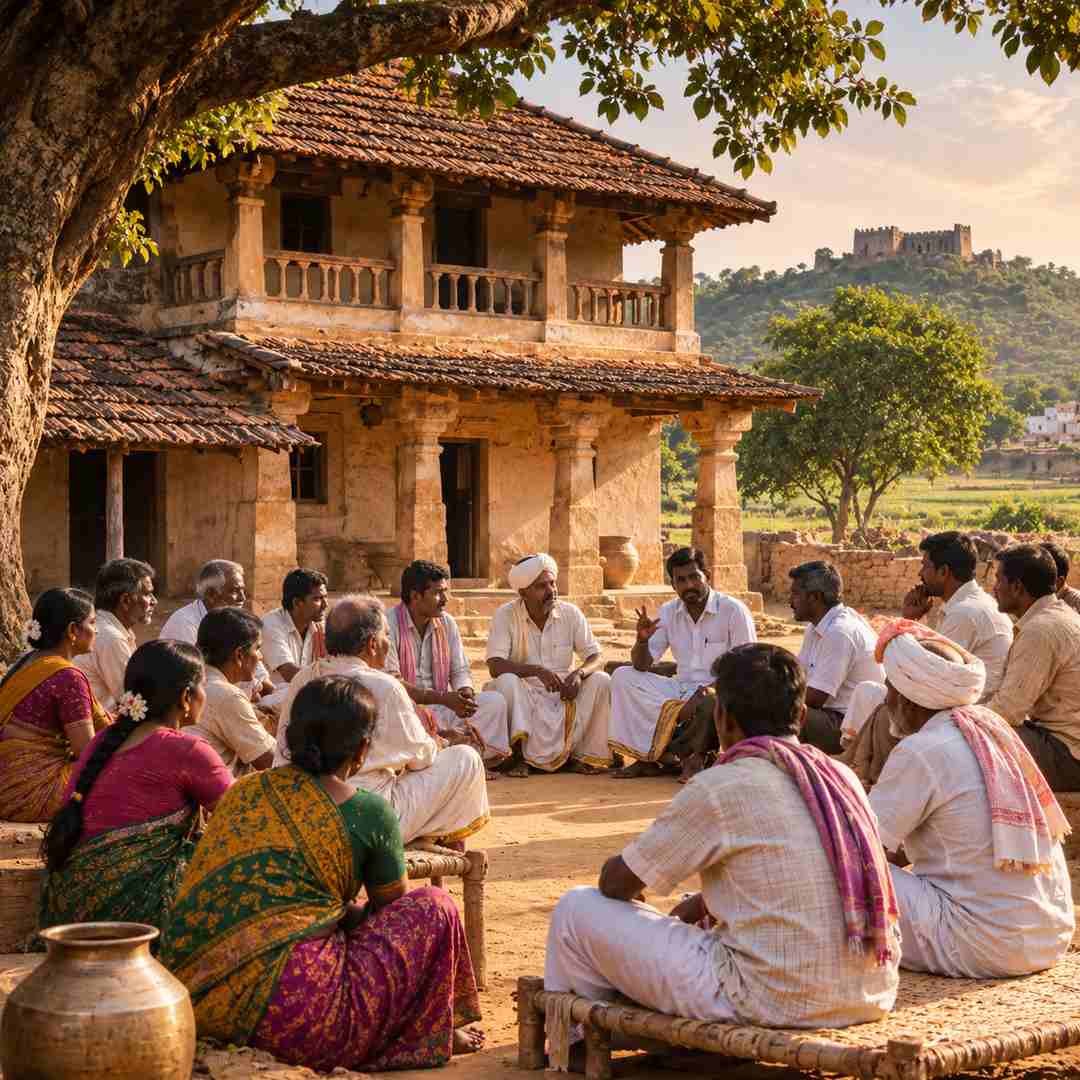
Caste remains an important factor in Telangana politics, influencing political representation, leadership selection, electoral mobilisation, social movements and constituency-level competition. However, caste alone does not determine voting behaviour. Local leadership, candidate popularity, party organisation, welfare delivery, religious identity, regional issues and perceptions about which party is likely to form the government also influence electoral outcomes.
Executive Summary
Telangana has a politically diverse social structure. Reddys, Velamas, Kammas, Gouds, Yadavs, Mudirajs, Munnuru Kapus, Padmashalis, Scheduled Caste communities, Scheduled Tribes and religious minorities all contribute to the state's political landscape. Community population, political representation and voting preference are three different things.
Source: Telangana SEEEPC Survey-2024, category-wise population (total 3,55,50,759).
Telangana's political equations are shaped by five interacting factors
Conceptual framework; not a quantitative model.
Telangana's Social Composition
The SEEEPC Survey-2024 is an important official source for the state's social composition. It classifies communities under Other Castes (OC), Backward Classes (BC), Scheduled Castes (SC) and Scheduled Tribes (ST).
| Category | Population | Share | Share of 100% |
|---|---|---|---|
| OC | 56,13,389 | 15.79% | |
| BC/OBC | 2,00,37,668 | 56.36% | |
| SC | 61,91,294 | 17.42% | |
| ST | 37,08,408 | 10.43% | |
| Total | 3,55,50,759 | 100% |
Source: SEEEPC Survey-2024. The classification is an administrative and social-category exercise; it is not a measurement of voting behaviour or party preference. Bars are drawn on a 0-100% scale.
- OC 15.79%
- BC/OBC 56.36%
- SC 17.42%
- ST 10.43%
OC Communities
| Community | Population | Relative size |
|---|---|---|
| Reddy | 17,10,244 | |
| Muslims other than BC-E | 6,22,346 | |
| Komati / Vaishya | 5,08,813 | |
| Kamma / Chowdary | 3,67,715 | |
| Brahmins | 3,35,806 | |
| Kapu / Naidu | 2,42,321 | |
| Velama | 1,43,523 | |
| Kshatriya / Raju | 60,471 | |
| Ayyangar / Iyer | 52,724 | |
| Jains | 51,623 | |
| Marwaris | 49,040 | |
| Christian other than BC-C | 34,096 |
Source: SEEEPC Survey-2024, OC classification. Bars are scaled to the largest entry (Reddy). Entries are not a complete description of every social identity in Telangana.
Reddys
The Reddy community has historically exercised considerable influence in Telangana and the wider undivided Andhra Pradesh landscape, with leaders in Congress, BRS and other formations. A. Revanth Reddy became Chief Minister after the 2023 Assembly election. Reddy candidates have contested and won under different party banners, so Reddy voters cannot be assumed to support any single party.
Velamas
The Velama community is comparatively small, yet politically visible. K. Chandrashekar Rao, former Chief Minister, belongs to the community. Its influence should not be confused with exclusive ownership of BRS or any other party.
Kammas, Brahmins, Vaishyas and other OC communities
Kammas have a presence in business, agriculture, education, media and political networks, but do not form a single political bloc. Brahmins, Komatis/Vaishyas, Kshatriyas, Kapu/Naidu groups and Jains have constituency-specific influence, often through business associations, professional networks and candidate accessibility.
BC/OBC Communities
| Community | Population | Relative size |
|---|---|---|
| Shaik | 27,95,727 | |
| Mudiraj | 26,39,027 | |
| Yadava / Golla | 20,18,725 | |
| Goud | 16,30,187 | |
| Munnuru Kapu | 13,75,018 | |
| Padmashali | 11,82,252 | |
| Rajaka | 9,95,972 | |
| Kuruba | 7,95,822 | |
| BC-C: SC converts to Christianity and their progeny | 70,664 |
Source: SEEEPC Survey-2024. Selected entries; do not add them together as a substitute for the complete BC total. Bars are scaled to the largest entry (Shaik).
Gouds and Yadavs
Goud and Yadav leaders have been active in Congress, BRS and other formations. In and around Hyderabad, leaders from both communities appear in different party networks, so community identity does not translate into a fixed party preference. Yadav aspirations also extend to cabinet positions, nominated posts and party office-bearer roles.
Munnuru Kapus
Munnuru Kapus are politically active, particularly in northern Telangana, with leaders in BJP, BRS and Congress. Community leaders have also raised demands for cabinet representation across party lines.
Mudirajs, Padmashalis, Rajakas, Kurubas and others
Mudiraj organisations have raised demands on representation, education, welfare and access to government positions. Padmashalis, associated with weaving and textiles, have pressed for economic support and welfare. For Rajakas, Kurubas and other BC communities, the larger challenge is converting demographic presence into representation in legislatures, cabinets, party leadership and public institutions.
Scheduled Caste Communities
| Community | Population | Relative size |
|---|---|---|
| Madiga | 36,57,551 | |
| Mala | 14,71,514 | |
| Beda Jangam | 1,90,120 | |
| Mala Sale / Netkani | 1,70,254 |
Source: SEEEPC Survey-2024, selected entries. Bars are scaled to the largest entry (Madiga).
The Madiga Reservation Porata Samithi (MRPS), associated with Manda Krishna Madiga, brought SC sub-categorisation to the centre of political debate, arguing that reservation benefits should be distributed more equitably among SC communities. Malas have a visible presence in education, public employment, politics and social organisations, and leaders in different parties. The central question is whether benefits are distributed proportionately; parties must balance SC organisations' demands with electoral representation and social-justice considerations.
Scheduled Tribe Communities
| Community | Population | Relative size |
|---|---|---|
| Sugalis / Lambadis / Banjaras | 24,04,056 | |
| Koya | 4,28,142 | |
| Gond / Naikpod / Rajgond | 3,81,895 | |
| Yerukula | 1,84,721 |
Source: SEEEPC Survey-2024, selected entries. Bars are scaled to the largest entry (Lambadi).
Lambadas, also known as Banjaras or Sugalis, are one of the largest tribal communities; their concerns include education, employment, welfare, land rights and protection of tribal identity. Koyas, concentrated in parts of the eastern and northern tribal belt, raise forest rights, land, displacement and infrastructure. Reserved seats ensure tribal representation in legislative institutions.
Religion and Politics
Hindus form the majority, Muslims are the largest religious minority, and religious identity should not be treated as a reliable predictor of how every individual votes. AIMIM, led by Asaduddin Owaisi, has a strong organisational and electoral presence in Hyderabad. BRS drew support from sections of Muslim voters in 2014 and 2018, and Congress gained among sections in 2023; this should not be read as a permanent shift.
Cross-Party Representation: Karimnagar 2023
Political representation is not exclusive to any one caste or party. In the 2023 Assembly election at Karimnagar, the principal candidates of three parties all belonged to the Munnuru Kapu community.
| Community | Leaders associated with |
|---|---|
| Goud | CongressBRS |
| Yadav | CongressBRS |
| Munnuru Kapu | BJPBRSCongress |
| Reddy | Multiple parties |
Illustrative of leadership across parties; it does not imply that all members of any community support the same party.
Voting Behaviour and Local Leadership
Five factors shape constituency-level electoral behaviour
A candidate's caste does not guarantee the votes of that entire community. A Reddy candidate of Congress does not automatically receive every Reddy vote; a rival may have stronger local networks or reputation, and a candidate from a smaller community may win by building a wider coalition. There is also insufficient reliable statewide evidence that Christian voters consistently prefer one party.
Conclusion
These dimensions are related but not interchangeable. Telangana's electoral politics is best understood through caste demographics, local leadership, party competition, religious representation, regional history and changing voter expectations.
Kalyan Chandra
Kalyan chandra is a political strategist, media and communication consultant with the expertise in public relations, marketing, political research, election campaign management, psephology and digital analytics. He focuses on strategic political consulting, offering services that include competitive research, public opinion collection, and digital media management. Kalyan has significantly contributed to successful campaigns across India with his meticulous approach and deep understanding of the political landscape.